CV Skills Section: The Complete Guide with Examples (2026)
CV skills section guide for 2026. Learn what to put in your skills section, how to format it for ATS, and see 15 real examples by industry.
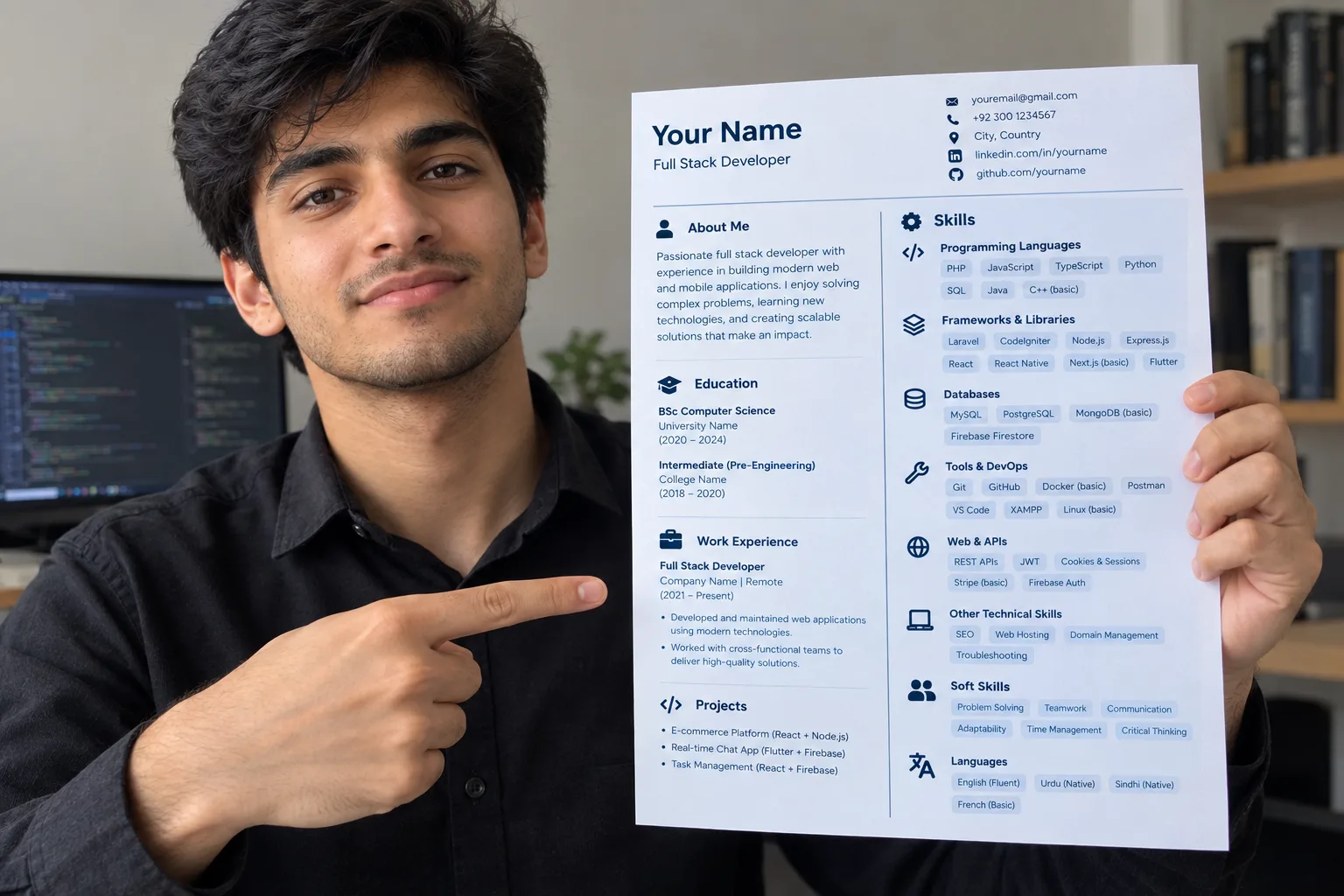
CV Skills Section: The Complete Guide with Examples (2026)
According to Jobscan, 75% of CVs are rejected by Applicant Tracking Systems (ATS) before a human ever reads them. According to LinkedIn's 2025 Skills-First Report, 92% of hiring managers say skills matter as much as or more than traditional qualifications.
According to CV Library, a leading UK CV platform:
> "Your CV skills section is the perfect way to showcase your in-demand skills and ensure they get noticed by recruiters."
According to Indeed:
> "Recruiters spend an average of 6-7 seconds on an initial resume scan."
That means your skills section has seconds to make an impression — but it's also one of the highest-value sections on your CV when done right.
This guide covers everything you need to know about writing a CV skills section that gets noticed by both ATS and human recruiters.
“CV Skills Section: Key Takeaways
- 75% of CVs are rejected by ATS before a human sees them
- 92% of hiring managers prioritize skills over qualifications
- Recruiters spend 6-7 seconds on initial resume scan
- Include 8-12 skills maximum — quality over quantity
- Split into hard skills and soft skills
- Tailor to each job description for maximum ATS match
- Place near the top, under your professional summary
- Avoid generic skills like 'hardworking' and 'team player'”
What You'll Learn in This Guide
- What a CV skills section is and why it matters
- Hard skills vs soft skills — what to include
- Where to place your skills section
- How to write a skills section step by step
- How many skills to list (and which to cut)
- ATS optimization for skills sections
- 15 real examples for different industries
- Common mistakes to avoid
What Is a CV Skills Section?
A CV skills section is a short, focused list of your most relevant professional skills, placed near the top of your CV. According to CV Library:
> "The idea is to include skills that will be most impressive to recruiters – ensuring they spot your suitability quickly."
According to Indeed:
> "A skills section highlights your abilities and helps employers quickly determine whether you're a good fit for the role."
What a skills section does:
- Gives ATS software keyword matches to score your CV
- Gives recruiters a 6-second snapshot of your capabilities
- Signals which role you're targeting
- Backs up your experience section with hard evidence
What a skills section is NOT:
- A list of every skill you've ever had
- A place for generic traits ("hardworking," "reliable")
- A substitute for demonstrated experience
- A dumping ground for hobbies or interests
Why the Skills Section Matters More in 2026
The hiring landscape has shifted toward skills-based hiring. According to LinkedIn's Skills-First Report:
> "Companies are increasingly moving away from degree requirements and focusing on demonstrated skills. In 2025, 45% of companies on LinkedIn used skills data to fill roles."
According to the National Association of Colleges and Employers (NACE):
> "Employers rank problem-solving, teamwork, and communication as the top three attributes they seek in candidates."
Three forces making the skills section critical:
| Force | Impact |
|-------|--------|
| ATS dominance | 75% of CVs filtered by software before human review |
| Skills-first hiring | 45% of companies screen on skills, not degrees |
| Short attention spans | Recruiters scan for 6-7 seconds on average |
Hard Skills vs Soft Skills: What's the Difference?
Before writing your skills section, understand the two types. According to Indeed:
> "Hard skills are teachable and measurable abilities, while soft skills are interpersonal traits that are harder to quantify."
| Category | Definition | Examples | How to Prove |
|---|---|---|---|
| Hard Skills | Teachable, measurable technical abilities | Python, Excel, SEO, CPA, project management, data analysis | Certifications, tools listed, years of experience |
| Soft Skills | Interpersonal traits and behaviors | Communication, leadership, adaptability, teamwork, problem-solving | Demonstrated through achievements and outcomes |
According to LinkedIn's 2025 Skills-First Report:
> "92% of hiring managers say soft skills matter as much or more than hard skills."
Recommendation: Aim for 60% hard skills, 40% soft skills in your section. Hard skills get you past ATS. Soft skills win over human reviewers.
According to Harvard Business Review:
> "The most effective CVs show skills in both a dedicated list and demonstrated through achievements."
Where to Place Your Skills Section on a CV
According to CV Library:
> "This section should be situated near the top of your CV, placed underneath your personal profile, so that it's seen as soon as the recruiter opens the document."
But placement should vary by career stage:
| Career Stage | Best Placement | Why |
|---|---|---|
| Freshers / Entry-Level | Directly after your professional summary | Your skills are your strongest asset without work experience |
| Mid-Career | After the summary OR after experience | Balance between what you know and what you've done |
| Senior / Executive | After experience | Your track record speaks louder than a skills list |
| Career Changers | Directly after summary | Highlights transferable skills for the new role |
Never place your skills section at the very bottom unless you're an executive with an impressive track record. Recruiters rarely scroll past the first page.
How to Write a CV Skills Section (Step-by-Step)
Step 1: Extract Skills from the Job Description
According to CV Library:
> "Use the job description to guide you. Read through and highlight any skills you possess that the employer has deemed to be the most important."
Process:
1. Copy the job description into a document
2. Highlight every skill, tool, or trait mentioned
3. Separate into hard skills and soft skills
4. Match against your own abilities
5. Keep the matches — these go in your skills section
Step 2: Choose 8-12 Skills Maximum
According to CV Library:
> "It's best to limit yourself to no more than 10 skills in your key skills section. This should give a really high-level overview."
Recommended split:
- 5-7 hard skills (matching the job description)
- 3-5 soft skills (backed by examples in experience)
- Total: 8-12 maximum
Why not more? According to Indeed, listing too many skills signals that you don't know which are most important — a red flag for hiring managers.
Step 3: Use the Right Format
According to CV Library:
> "Use bullet points. This helps to make them clear, concise and quick and easy for recruiters to read and digest."
Three format options:
| Format | Best For | Example |
|---|---|---|
| Simple Bulleted List | Most CVs | • Python • SQL • Data Analysis • Project Management |
| Categorized Groups | Technical roles with many skills | Technical: Python, SQL, AWS Soft: Leadership, Communication |
| Skills with Proficiency | Language or tool skills | Languages: English (Native), Spanish (Fluent) |
Step 4: Be Specific, Not Generic
According to CV Library:
> "Be as specific as possible where you can. For example, don't just say 'coding' but give specific languages such as Python and JavaScript."
Weak vs Strong Skills:
| Weak (Generic) | Strong (Specific) |
|---|---|
| "Good with computers" | "Advanced Excel (VLOOKUP, Pivot Tables), Python, SQL" |
| "Communication skills" | "Client presentation, cross-functional collaboration, technical writing" |
| "Marketing" | "SEO, Google Analytics, HubSpot, Paid Social (Meta, LinkedIn)" |
| "Leadership" | "Team leadership (12+ reports), cross-departmental project management" |
Step 5: Optimize for ATS Keywords
According to Jobscan:
> "Tailoring your CV to the job description can increase your match rate by up to 40%."
The ATS keyword method:
1. Use the exact phrasing from the job description
2. If they say "project management," don't write "managed projects"
3. Match acronyms and full forms ("Search Engine Optimization (SEO)")
4. Include both technical tools and methodology terms
5. Repeat key skills in your experience section for context
How Many Skills Should You List?
This is the most common question. Here's the definitive answer:
| Career Stage | Number of Skills | Reason |
|---|---|---|
| Fresher / School Leaver | 8-10 | Focus on transferable + technical skills learned in education |
| Entry-Level (1-3 years) | 8-12 | Mix of hard skills from work + soft skills |
| Mid-Career (4-10 years) | 10-12 | Emphasize specialized and leadership skills |
| Senior / Executive | 8-10 | Focus on strategic and leadership competencies |
Rule of thumb: If a skill wouldn't matter to the hiring manager, cut it. If two skills are nearly identical, merge them.
ATS Optimization for Skills Sections
According to Jobscan, 75% of CVs are rejected by ATS before reaching a human recruiter. Here's how to make sure yours passes:
| ATS Rule | Why It Matters | How to Comply |
|---|---|---|
| Use standard section heading | ATS looks for 'Skills' heading | Label the section 'Skills' or 'Key Skills' |
| Avoid tables and columns | ATS can't parse grid layouts | Use a simple bulleted list |
| Use standard fonts | ATS may not read unusual fonts | Use Arial, Calibri, or Times New Roman |
| Include exact keyword matches | ATS matches job description terms | Mirror the language of the job post |
| Both acronyms and full forms | ATS may search for either | Write 'Search Engine Optimization (SEO)' |
| Avoid graphics and icons | ATS can't read images | Use plain text only |
According to Indeed:
> "Use standard section headings like 'Skills' — ATS software is designed to recognize these and may not parse creative alternatives."
15 CV Skills Section Examples by Industry
1. Accounting & Finance
“Skills
• Financial Reporting & Analysis
• Forecasting & Budgeting
• Accounts Reconciliation
• Payroll Management
• Tax Compliance (GAAP, IFRS)
• Auditing
• Cost Reduction
• Advanced Excel (VLOOKUP, Pivot Tables)
• SAP / Oracle Financials
• CPA (Certified Public Accountant)”
2. Customer Service
“Skills
• Complaint Resolution
• Multi-Channel Communication (Phone, Email, Chat)
• CRM Software (Salesforce, Zendesk)
• Point of Sale (POS) Systems
• Multi-tasking Under Pressure
• Upselling & Cross-Selling
• Customer Retention
• Patience & Empathy
• Data Entry Accuracy
• Conflict De-escalation”
3. Administrative & Business Support
“Skills
• Microsoft Office Suite (Word, Excel, PowerPoint, Outlook)
• Calendar & Diary Management
• Travel Coordination
• Data Entry & Database Management
• Email & Inbox Management
• Telephone Etiquette
• Filing & Document Control
• Office Coordination
• Meeting Minute Taking
• Business Acumen”
4. School Leaver / Fresher
“Skills
• IT Proficiency (Microsoft Office, Google Suite)
• Written & Verbal Communication
• Mathematical Aptitude
• Teamwork & Collaboration
• Time Management
• Creativity & Problem-Solving
• Research Skills
• Language Skills (Spanish — Conversational)
• Volunteer Coordination
• GCSE Grades (Maths A, English B)”
5. Marketing & Digital
“Skills
• Search Engine Optimization (SEO)
• Social Media Management (Instagram, LinkedIn, TikTok)
• Copywriting & Content Creation
• Google Analytics (GA4)
• Email Marketing (Mailchimp, HubSpot)
• Paid Advertising (Meta Ads, Google Ads)
• Market Research
• Graphic Design (Canva, Adobe Suite)
• Video Editing (Premiere Pro)
• Marketing Automation”
6. Teaching & Education
“Skills
• Lesson Planning & Curriculum Design
• Classroom Management
• Special Educational Needs (SEN) Support
• Student Assessment & Feedback
• Interactive Whiteboard Technology
• Conflict Resolution
• Differentiated Instruction
• Parent-Teacher Communication
• Educational Technology (Google Classroom, Seesaw)
• Safeguarding & Child Protection”
7. Project Management
“Skills
• Agile & Scrum Methodologies
• Risk Management
• Budget & Cost Control
• Stakeholder Communication
• Project Management Tools (Asana, Jira, Monday.com)
• Resource Allocation
• Team Leadership
• Performance Monitoring
• Timeline Management
• PMP Certification”
8. IT & Software Development
“Skills
• Programming: Python, JavaScript, Java, SQL
• Cloud Computing: AWS, Azure, Google Cloud
• Cybersecurity Fundamentals
• Operating Systems: Windows, Linux, macOS
• Version Control: Git, GitHub
• Database Management: MySQL, PostgreSQL
• Troubleshooting & Debugging
• API Integration
• Data Analysis & Visualization
• IT Support & Helpdesk”
9. Sales & Business Development
“Skills
• Lead Generation & Prospecting
• Negotiation & Closing
• CRM Software (Salesforce, HubSpot)
• Cold Calling & Email Outreach
• Sales Presentations & Demos
• Relationship Building
• Pipeline Management
• Social Selling (LinkedIn Sales Navigator)
• Quota Achievement
• Account Management”
10. Healthcare & Nursing
“Skills
• Patient Care & Assessment
• Electronic Health Records (Epic, Cerner)
• Medication Administration
• Clinical Documentation
• Infection Control
• Wound Care
• Vital Signs Monitoring
• Patient Education
• Emergency Response (BLS, ACLS)
• HIPAA Compliance”
11. Engineering (Mechanical / Civil)
“Skills
• CAD Software (AutoCAD, SolidWorks)
• Project Planning & Scheduling
• Structural Analysis
• Technical Drawing & Blueprint Reading
• Quality Assurance
• Health & Safety Compliance (OSHA)
• Cost Estimation
• Materials Selection
• Finite Element Analysis (FEA)
• Team Collaboration”
12. Creative & Design
“Skills
• Adobe Creative Suite (Photoshop, Illustrator, InDesign)
• UI/UX Design (Figma, Sketch)
• Typography & Layout
• Brand Identity Design
• Motion Graphics (After Effects)
• Wireframing & Prototyping
• Creative Direction
• Client Presentation
• Print & Digital Design
• Color Theory”
13. Human Resources
“Skills
• Recruitment & Talent Acquisition
• HRIS Systems (Workday, BambooHR)
• Employee Relations
• Performance Management
• Compensation & Benefits
• Compliance (Employment Law, GDPR)
• Onboarding & Training
• Conflict Resolution
• HR Analytics
• CIPD / SHRM Certification”
14. Trades & Skilled Labor
“Skills
• Electrical Installation & Repair
• Wiring & Circuit Testing
• Blueprint Reading
• Hand & Power Tool Proficiency
• Health & Safety (OSHA 30)
• HVAC Systems
• Plumbing & Pipefitting
• Welding (MIG, TIG)
• Equipment Maintenance
• Team Supervision”
15. Data Science & Analytics
“Skills
• Python (Pandas, NumPy, Scikit-learn)
• SQL & Database Queries
• Data Visualization (Tableau, Power BI)
• Statistical Analysis
• Machine Learning
• A/B Testing
• Data Cleaning & Preprocessing
• Excel (Advanced)
• Business Intelligence
• Stakeholder Reporting”
Transferable Skills for Career Changers
If you're changing careers, your skills section is where you prove you can make the leap. According to Indeed:
> "Transferable skills are abilities that can be applied across different roles and industries."
High-value transferable skills to include:
| Transferable Skill | Where It Applies | How to Frame It |
|---|---|---|
| Communication | Every role | "Client-facing communication, presentation, technical writing" |
| Project Management | Business, tech, ops | "Coordinated cross-functional projects with 15+ stakeholders" |
| Data Analysis | Marketing, finance, ops, HR | "Analyzed customer data to drive 25% retention improvement" |
| Leadership | Any management track | "Led team of 8, mentored 3 junior staff to promotion" |
| Problem-Solving | Every role | "Diagnosed and resolved process bottlenecks, saving 10 hrs/week" |
Top 5 Tips for Creating a CV Skills Section
According to CV Library, these five principles govern effective skills sections:
- Use bullet points — Makes skills clear, concise, and easy to scan in seconds.
- Mix hard and soft skills — Start with hard skills, add transferable soft skills, especially if you have limited experience.
- Don't include everything — Limit to 8-12 skills. This gives a high-level overview, not a full inventory.
- Be specific — Don't say 'coding,' say 'Python, JavaScript, SQL.' Don't say 'marketing,' say 'SEO, Google Analytics, HubSpot.'
- Use the job description — Highlight skills the employer has explicitly stated they want, and mirror their language.
Common CV Skills Section Mistakes to Avoid
| Mistake | Why It Hurts | Fix It |
|---|---|---|
| Listing 20+ skills | Signals you don't know what matters | Cut to 8-12 most relevant |
| Using vague soft skills only | No ATS keywords, no differentiation | Add specific hard skills with tools named |
| Copy-pasting the same list for every job | Low ATS match rate (under 40%) | Tailor to each job description |
| Including unrelated skills | Distracts from your strongest assets | Only include skills relevant to the role |
| Using graphics or skill bars | ATS can't read them, wastes space | Use plain text bullets |
| Forgetting acronyms and full forms | ATS may search for either version | Write 'Search Engine Optimization (SEO)' |
| Listing skills you can't demonstrate | Damages trust in interviews | Only list skills you can prove with examples |
Expert Quotes to Remember
“"Your CV skills section is the perfect way to showcase your in-demand skills and ensure they get noticed by recruiters."”
“"Recruiters spend an average of 6-7 seconds on an initial resume scan."”
“"92% of hiring managers say soft skills matter as much or more than hard skills."”
“"Tailoring your CV to the job description can increase your match rate by up to 40%."”
“"The most effective CVs show skills in both a dedicated list and demonstrated through achievements."”
Sources & References
- Jobscan — ATS rejection rates and keyword matching data
- Indeed — Resume scanning time and skills section guidance
- LinkedIn Skills-First Report — Skills-based hiring trends
- National Association of Colleges and Employers (NACE) — Employer skills preferences
- CV Library — Skills section examples and formatting
- Harvard Business Review — Resume effectiveness research
- Bureau of Labor Statistics (BLS) — Occupational skills data
Conclusion: Write a CV Skills Section That Gets Noticed
According to Jobscan, 75% of CVs are rejected by ATS before a human sees them. According to LinkedIn, 92% of hiring managers prioritize skills over qualifications.
Your skills section isn't optional — it's the highest-leverage section on your CV.
Key Takeaways:
- Include 8-12 skills maximum, mixing hard and soft skills
- Place the section near the top, under your summary
- Use bullet points for readability
- Be specific with tools, languages, and certifications
- Mirror the job description's language for ATS matching
- Avoid generic traits and graphics
- Tailor for every application
Action Steps for Today:
1. Copy the job description for a role you're targeting
2. Highlight every skill the employer wants
3. Match your abilities against that list
4. Write 8-12 specific skills (60% hard, 40% soft)
5. Place the section near the top of your CV
6. Build your ATS-optimized CV with our ATS CV Maker
What should I put in the skills section of my CV?
Include 8-12 skills that directly match the job description, split between hard skills (technical abilities like Python, Excel, or SEO) and soft skills (interpersonal abilities like communication and teamwork). According to Jobscan, tailoring your skills to the job description can increase your match rate by up to 40%.
How many skills should I list on my CV?
List 8-12 skills maximum. According to Indeed, 'recruiters spend an average of 6-7 seconds on an initial resume scan,' so focusing on your most relevant and impressive skills is more effective than listing everything. Quality beats quantity every time.
Where should the skills section go on a CV?
Place your skills section near the top, right after your professional summary. For experienced candidates, it can also go at the bottom. According to CV Library, 'this section should be situated near the top of your CV, placed underneath your personal profile.'
Should I use a separate skills section or integrate skills into my experience?
Use both. A dedicated skills section gives ATS systems and recruiters a quick scan of your core competencies, while integrated skills in your experience section provide context and proof. According to Harvard Business Review, 'the most effective resumes show skills in both a dedicated list and demonstrated in achievements.'
What is the difference between hard skills and soft skills on a CV?
Hard skills are teachable, measurable abilities (programming languages, accounting, data analysis). Soft skills are interpersonal traits (communication, leadership, adaptability). According to LinkedIn's 2025 Skills-First report, '92% of hiring managers say soft skills matter as much or more than hard skills.'
About the Author
Ash is a resume expert and career strategist who has helped thousands of candidates land interviews through ATS-optimized resumes. Ash's work has been cited in leading career publications and trusted by job seekers worldwide.
Comments
Loading comments…